
10 Powerful Reasons Manufacturing Land Demand Is Exploding
Introduction
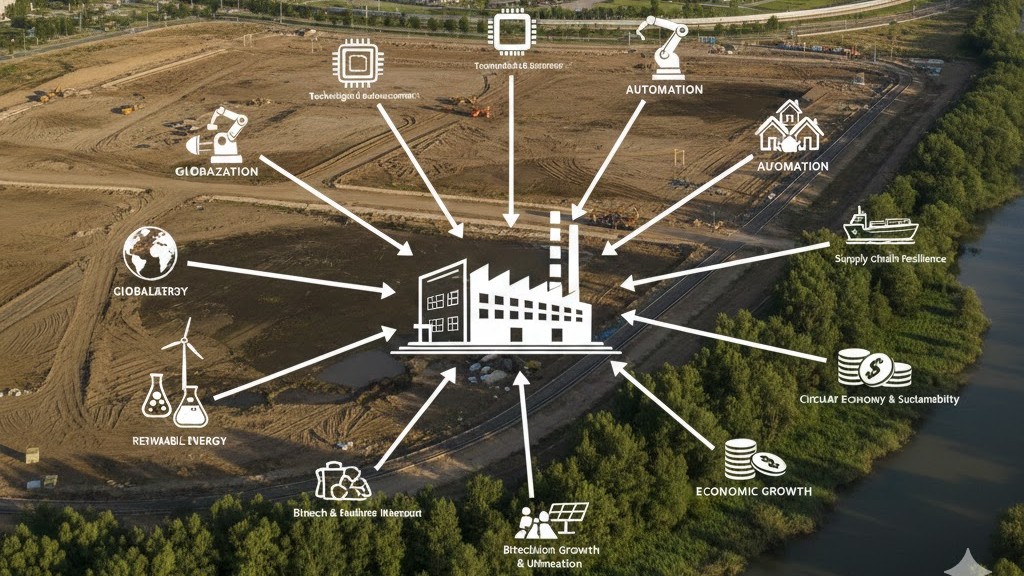
Manufacturing land is no longer a quiet asset class. Across global and regional markets, manufacturing land demand is exploding at an unprecedented pace, driven by technological shifts, supply chain disruptions, government policies, and industrial transformation.
Manufacturers, investors, and developers are racing to secure strategic, future-ready manufacturing land before availability shrinks further and prices climb higher. This surge is not speculative — it is structural, long-term, and accelerating.
Below are 10 powerful reasons why manufacturing land demand is exploding right now, explained clearly so readers understand the opportunity — and why delaying action could be costly.
Global Supply Chain Restructuring Is Forcing Manufacturers to Expand Locally
One of the strongest drivers behind the surge in manufacturing land demand is global supply chain restructuring. After years of relying on distant production hubs, companies are now prioritizing local and regional manufacturing to reduce risk.
Manufacturers want land that allows them to:
-
Shorten delivery timelines
-
Reduce dependency on overseas suppliers
-
Improve operational control
-
Respond faster to market changes
This shift has triggered urgent land acquisition, especially in strategic industrial zones.
Why this matters now:
-
Trade disruptions are becoming common
-
Transportation costs remain volatile
-
Customers expect faster fulfillment
Manufacturing land near logistics corridors, ports, and highways is seeing exceptional demand growth. Companies that delay land acquisition often face limited availability or inflated prices later.
This restructuring trend is permanent, not temporary — making early land acquisition a strategic advantage.
Industrial Land Supply Is Shrinking While Demand Keeps Rising
Manufacturing land is a finite resource, and supply is shrinking rapidly. Urban expansion, residential development, and commercial projects are consuming land that was once reserved for industrial use.
At the same time, manufacturing demand continues to rise due to:
-
Population growth
-
Industrial automation
-
Export-driven economies
Key consequences:
-
Fewer approved manufacturing zones
-
Rising land competition
-
Faster price appreciation
Many manufacturers now struggle to find suitably zoned manufacturing land, forcing them to compromise on location or pay premium prices.
This imbalance between limited supply and rising demand is one of the biggest reasons manufacturing land demand is exploding — and why waiting reduces choices.
Industry 4.0 Requires Larger, Smarter Manufacturing Land
Modern manufacturing is driven by automation, robotics, AI, and data integration. These technologies require specialized land layouts that traditional industrial plots cannot support.
Future-ready manufacturing land must accommodate:
-
Wide factory footprints
-
High floor loading capacity
-
Smart infrastructure
-
Autonomous vehicle movement
Manufacturers are actively replacing older facilities with automation-ready land, accelerating demand.
Why urgency is real:
-
Retrofitting old land is costly
-
Automation requires long-term planning
-
Smart factories outperform traditional setups
Manufacturing land that supports Industry 4.0 is being snapped up quickly, leaving limited options for late movers.
Government Incentives Are Triggering Immediate Land Rushes
Governments worldwide are offering tax incentives, grants, and infrastructure support to boost manufacturing growth. These incentives are typically tied to specific industrial zones, triggering sudden land demand surges.
Manufacturers rush to secure land in:
-
Approved industrial parks
-
Export processing zones
-
Special economic zones
Why this creates urgency:
-
Incentives are time-bound
-
Early entrants gain the most benefits
-
Land prices rise once incentives are announced
Manufacturing land within incentive-backed zones becomes highly competitive, often selling out faster than expected.
Logistics Efficiency Has Become a Profit-Critical Factor
Transportation and logistics costs now play a major role in profitability. Manufacturers demand land that offers:
-
Highway connectivity
-
Port accessibility
-
Rail infrastructure
Benefits of logistics-optimized land:
-
Faster delivery
-
Lower fuel costs
-
Reliable supply chains
Manufacturing land far from logistics hubs is losing appeal, while strategically located land is experiencing explosive demand.
This shift is forcing businesses to act quickly before prime logistics-linked land disappears.
Sustainability Regulations Are Reshaping Land Preferences
Environmental compliance is now a non-negotiable requirement. Manufacturers must operate on land that supports:
-
Green energy integration
-
Waste management systems
-
Environmental zoning compliance
Why demand is rising:
-
Regulations are stricter
-
Non-compliant land delays approvals
-
Sustainable operations attract investors
Manufacturing land that supports eco-friendly development is increasingly scarce — and therefore highly demanded.
Workforce Accessibility Is Driving Location-Based Competition
Manufacturing is still people-driven. Land located near:
-
Residential areas
-
Public transport
-
Urban centers
is far more attractive to employers.
Why this matters:
-
Lower staff turnover
-
Easier hiring
-
Higher productivity
Manufacturing land with workforce accessibility is being prioritized, driving demand spikes in specific regions.
High-Tech Industries Are Competing for Manufacturing Land
Data centers, semiconductor plants, and advanced manufacturing facilities all require industrial-grade land. This competition is intensifying.
Resulting effects:
-
Faster land absorption
-
Increased pricing pressure
-
Limited future availability
Manufacturing land that supports high power loads and infrastructure is in extremely high demand.
Investors Are Treating Manufacturing Land as a Strategic Asset
Manufacturing land is now viewed as a long-term investment, not just operational space.
Why investors are buying aggressively:
-
Strong appreciation potential
-
Stable demand
-
Lease income opportunities
Investor activity further tightens supply, increasing urgency for manufacturers to act quickly.
Delaying Land Acquisition Is Becoming a Costly Mistake
Every year of delay means:
-
Higher land prices
-
Fewer choices
-
Compromised locations
Manufacturers who wait often end up paying significantly more or settling for less strategic land.
This is why manufacturing land demand continues to explode — because those who understand the trend move early.
Frequently Asked Questions (FAQs)
1. Why is manufacturing land demand increasing so fast?
Because of supply chain shifts, automation, logistics needs, and shrinking land supply.
2. Is manufacturing land a good long-term investment?
Yes. High demand, limited supply, and industrial growth drive strong appreciation.
3. What makes manufacturing land future-ready?
Smart infrastructure, logistics access, sustainability compliance, and flexible zoning.
4. When is the best time to secure manufacturing land?
Now — before competition and prices rise further.
Conclusion
The reasons are clear: manufacturing land demand is exploding, and this growth is structural, not temporary. Businesses that act now secure better locations, lower costs, and long-term stability.
If you are planning to buy, sell, or develop manufacturing land, delaying action could mean missed opportunities and higher entry costs.
👉 Contact us today to get expert guidance on manufacturing land solutions and secure the right industrial location before availability tightens further.
