
Why Due Diligence Is Essential Before Buying an Industrial Property
Purchasing an industrial property is a significant investment that can influence the long-term success of a business. Whether you are buying a factory, warehouse, or industrial land, selecting the right property involves much more than comparing prices or choosing a convenient location. Every industrial property has unique characteristics that may affect future operations, expansion opportunities, maintenance costs, and overall investment value.
This is why due diligence is an essential part of the buying process. Due diligence is the careful evaluation of a property before committing to a purchase. It helps buyers understand the property’s condition, legal status, infrastructure, and suitability for their business needs while reducing the risk of unexpected problems after the transaction is completed.
Taking the time to conduct proper due diligence allows businesses to make informed decisions, protect their investment, and avoid costly mistakes that could affect future growth.
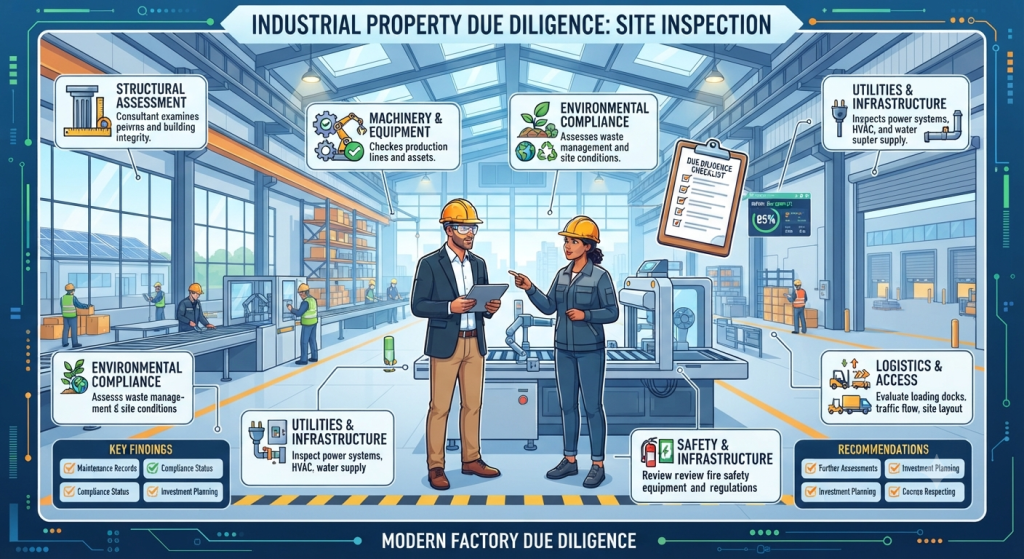
Purchasing an industrial property is one of the most significant investments a business can make. Whether you are planning to buy a factory, warehouse, distribution centre, or industrial land, the property you choose will influence your business operations, productivity, expansion opportunities, and long-term financial performance.
Unlike purchasing a residential property, buying industrial real estate involves many additional considerations. Businesses must evaluate whether the property can support production requirements, logistics operations, workforce accessibility, utility demands, future expansion, and compliance with local regulations. Choosing the wrong property can lead to operational inefficiencies, expensive upgrades, legal complications, or even the need to relocate sooner than expected.
This is why industrial property due diligence is essential.
Due diligence is the process of carefully investigating every important aspect of a property before completing the purchase. Rather than making a decision based solely on location, appearance, or price, buyers take the time to verify legal ownership, inspect the building’s condition, review infrastructure, understand zoning regulations, and assess whether the property truly meets current and future business needs.
Conducting proper due diligence allows businesses to minimise risks, protect their investment, and make confident purchasing decisions. It also helps buyers avoid costly surprises after taking ownership, making it one of the most valuable steps in any industrial property transaction.
What Is Industrial Property Due Diligence?
Industrial property due diligence is a comprehensive evaluation carried out before purchasing an industrial property.
The purpose is to identify potential risks, confirm important information, and ensure the property is suitable for the buyer’s intended use.
Rather than relying on marketing brochures or property listings alone, buyers collect detailed information that allows them to make informed decisions based on facts rather than assumptions.
A typical due diligence process may involve reviewing:
- Property ownership
- Land title documentation
- Building condition
- Structural integrity
- Zoning regulations
- Utility availability
- Environmental considerations
- Accessibility
- Infrastructure
- Future development potential
Each of these factors contributes to the overall value and practicality of the property.
Skipping this process may expose buyers to unexpected financial or operational challenges that could have been identified before completing the purchase.
Why Due Diligence Is More Important Than Price Alone
Many buyers naturally focus on the purchase price when comparing industrial properties.
While price is certainly important, it should never be the only factor influencing the decision.
A lower-priced property may initially appear attractive, but hidden problems could significantly increase future expenses.
For example, an older factory may require extensive structural repairs, electrical upgrades, roof replacement, drainage improvements, or machinery modifications before it becomes operational.
Similarly, a warehouse located far from major highways may increase transportation costs every day for many years.
Without proper due diligence, these hidden costs often remain undiscovered until after the purchase has been completed.
A thorough evaluation helps buyers compare properties based on their overall value instead of simply their purchase price.
This approach allows businesses to invest in properties that support long-term operational success rather than creating unnecessary financial burdens.
Verifying Legal Ownership
One of the first and most important steps during due diligence is confirming legal ownership.
Before any transaction proceeds, buyers should ensure the seller has the legal right to transfer ownership of the property.
Property ownership should be carefully verified through official documentation to avoid future disputes.
Buyers should also confirm whether the property is affected by:
- Ownership disputes
- Outstanding legal claims
- Easements
- Land restrictions
- Existing tenancy agreements
- Encumbrances
Resolving legal uncertainties before purchasing the property helps reduce future complications and provides greater confidence throughout the transaction process.
Professional legal advice is often beneficial during this stage because property documentation can be complex and requires careful review.
Understanding Zoning Regulations
Not every industrial property can be used for every type of business.
Local authorities establish zoning regulations that determine how specific properties may be used.
Before purchasing an industrial property, buyers should verify that their intended business activities comply with local planning requirements.
Important questions include:
- Is manufacturing permitted?
- Can warehouse operations be conducted?
- Are heavy industrial activities allowed?
- Are there restrictions on operating hours?
- Can future building extensions be approved?
- Are there environmental limitations?
Ignoring zoning regulations may result in costly delays, rejected development applications, or restrictions that prevent normal business operations.
Proper due diligence helps ensure the property supports both current business needs and future expansion plans.
Inspecting the Building Condition
A factory or warehouse may appear to be in excellent condition during an initial viewing.
However, many structural problems are not immediately visible.
Professional inspections help identify issues before they become expensive surprises.
Areas that should be carefully evaluated include:
- Roofing systems
- Structural framework
- Floors
- Walls
- Loading bays
- Drainage systems
- Fire safety systems
- Electrical installations
- Plumbing systems
- Ventilation systems
Older industrial buildings may also require upgrades to comply with current safety standards or operational requirements.
Understanding the property’s physical condition allows buyers to estimate future maintenance costs and negotiate more effectively if repairs are required.
Evaluating Infrastructure and Utility Capacity
Industrial properties depend heavily on reliable infrastructure.
Even a well-designed factory may struggle to support business operations if utilities cannot meet production demands.
During due diligence, buyers should assess whether the property provides sufficient infrastructure for both current operations and future growth.
Key considerations include:
- Electrical power capacity
- Water supply
- Internet connectivity
- Telecommunications
- Drainage systems
- Waste disposal facilities
- Internal road access
- Parking areas
Businesses with manufacturing operations should pay particular attention to electrical supply because equipment often requires higher power capacity than standard commercial buildings.
Similarly, businesses relying on logistics should ensure the property has appropriate loading facilities, vehicle access, and sufficient space for daily transportation activities.
Reliable infrastructure supports smoother operations, reduces downtime, and contributes to long-term business efficiency.
Assessing Accessibility and Transportation Networks
Location is often considered one of the most important factors when purchasing an industrial property. However, businesses should evaluate more than just the property’s address. Accessibility directly affects logistics efficiency, employee convenience, supplier relationships, and customer service.
An industrial property should provide convenient access to major transportation networks that support daily business activities.
Important factors to review include:
Distance to major highways
Access to ports and airports
Public transportation availability
Road conditions
Heavy vehicle accessibility
Traffic flow during peak hours
Nearby industrial hubs
For businesses involved in manufacturing, warehousing, or distribution, efficient transportation routes can significantly reduce delivery times and transportation costs.
Poor accessibility may lead to delays, increased fuel expenses, and operational inefficiencies that affect overall productivity.
Conducting a thorough location assessment helps ensure the property supports both current logistics requirements and future business expansion.
Reviewing Future Expansion Opportunities
Many businesses purchase industrial properties with long-term growth in mind.
Although a factory or warehouse may meet current operational requirements, future expansion plans should also be considered during the due diligence process.
Questions to evaluate include:
Is there additional land available?
Can the building be extended?
Will future production require more space?
Are expansion approvals likely to be granted?
Does the surrounding area support future business growth?
Planning for future expansion helps businesses avoid the inconvenience and expense of relocating when operations increase.
Purchasing a property that allows future development often provides greater long-term value than choosing one that only satisfies immediate needs.
Understanding Environmental Considerations
Environmental factors can influence both the suitability and long-term value of an industrial property.
Depending on the property’s location and previous usage, buyers should investigate whether environmental issues could affect future operations.
Areas to review may include:
Flood risks
Soil conditions
Drainage performance
Previous land contamination
Environmental compliance
Nearby industrial activities
For example, properties located in flood-prone areas may require additional protection measures, while land with environmental contamination could involve costly remediation work.
Identifying these issues before purchasing helps businesses make informed decisions and avoid unexpected liabilities.
Evaluating Safety and Compliance
Industrial properties should comply with relevant safety regulations to support safe daily operations.
Buyers should assess whether the property includes appropriate safety features and whether existing systems meet current requirements.
Important areas include:
Fire protection systems
Emergency exits
Ventilation systems
Electrical safety
Structural compliance
Workplace safety provisions
If improvements are required, buyers should include these costs when evaluating the property’s overall investment value.
Maintaining compliance not only protects employees but also helps reduce legal and operational risks.
Reviewing Operating Costs
The purchase price represents only part of the overall investment.
Industrial properties also involve ongoing operating expenses that should be evaluated during due diligence.
These may include:
Property maintenance
Utility costs
Insurance
Security services
Property management
Local authority assessments
Building repairs
Understanding these ongoing expenses allows businesses to prepare more accurate operating budgets and evaluate the property’s affordability over the long term.
Working With Experienced Industrial Property Consultants
Industrial property transactions often involve technical, legal, and commercial considerations that require specialised knowledge.
Experienced industrial property consultants provide valuable guidance throughout the buying process by helping businesses evaluate properties objectively.
Professional consultants can assist with:
Identifying suitable industrial properties
Comparing available options
Assessing market conditions
Coordinating property inspections
Reviewing investment potential
Supporting negotiations
Providing local market knowledge
Their experience helps buyers make informed decisions while reducing unnecessary risks during the purchasing process.
Common Due Diligence Mistakes
Some buyers unintentionally overlook important details because they focus primarily on finding a property quickly.
Common mistakes include:
Choosing based only on price
Skipping professional inspections
Ignoring zoning restrictions
Failing to review legal documentation
Underestimating future expansion needs
Overlooking infrastructure capacity
Not seeking professional advice
Avoiding these mistakes helps businesses protect their investment while ensuring the property supports long-term operational success.
Why Due Diligence Supports Long-Term Business Growth
Industrial properties are long-term business assets.
A carefully selected property can improve operational efficiency, support future expansion, and strengthen overall business performance for many years.
Proper due diligence helps businesses:
Reduce investment risks
Improve decision-making
Identify hidden issues early
Protect financial investments
Support operational efficiency
Increase long-term property value
Rather than viewing due diligence as an additional step, businesses should consider it an investment in the future success of their operations.
By understanding every aspect of a property before purchasing, buyers gain greater confidence and reduce the likelihood of unexpected challenges after ownership is transferred.
Long-Term Benefits of Conducting Proper Due Diligence
Investing time in due diligence before purchasing an industrial property provides significant long-term advantages. While the process requires careful planning and professional evaluation, it often prevents costly mistakes that could affect business operations for years.
Key benefits include:
✔ Reduced investment risk
✔ Better purchasing decisions
✔ Lower unexpected repair costs
✔ Improved operational efficiency
✔ Greater legal confidence
✔ Better long-term financial planning
✔ Stronger business growth opportunities
✔ Higher property investment value
Instead of reacting to problems after completing a purchase, businesses can identify and address potential issues beforehand. This proactive approach helps minimise disruptions and allows companies to move forward with greater confidence.
Why Professional Advice Makes a Difference
Industrial property transactions are often more complex than residential purchases. In addition to evaluating the building itself, buyers must consider operational requirements, infrastructure, compliance, accessibility, and future business goals.
Working with experienced industrial property consultants provides valuable insights throughout the buying process.
Professional guidance can help businesses:
Understand current market conditions
Identify suitable industrial properties
Evaluate investment opportunities
Review important documentation
Assess operational suitability
Negotiate favourable purchase terms
Consultants also understand local industrial markets and can recommend properties that align with a company’s current needs and future expansion plans.
By combining professional advice with thorough due diligence, buyers reduce uncertainty and make more informed investment decisions.
Choosing the Right Property for Long-Term Success
Every business has unique operational requirements.
For example:
Manufacturers may prioritise high electrical capacity and production space.
Logistics companies may focus on loading bays and highway access.
Warehousing businesses may require larger storage areas and efficient transportation links.
Growing businesses may prioritise future expansion opportunities.
Because no two businesses are exactly alike, selecting an industrial property should never be based solely on price or appearance.
Instead, buyers should evaluate whether the property supports:
Daily operational efficiency
Employee accessibility
Customer requirements
Future business growth
Long-term investment objectives
A carefully selected industrial property becomes more than just a workplace—it becomes a valuable asset that supports business success for many years.
Conclusion
Purchasing an industrial property is one of the most important financial decisions a business can make. Whether you are buying a factory, warehouse, or industrial land, conducting proper due diligence helps ensure the property meets your operational, financial, and long-term business requirements.
By reviewing legal ownership, zoning regulations, building condition, infrastructure, accessibility, environmental considerations, and future expansion potential, buyers gain a complete understanding of the property’s strengths and potential risks before committing to a purchase.
Rather than focusing only on the purchase price, businesses that invest in thorough due diligence are better positioned to avoid costly surprises, reduce investment risks, and make confident decisions that support sustainable growth.
Working with experienced industrial property professionals further strengthens the buying process by providing expert guidance, market knowledge, and practical advice that helps businesses secure the right property for their future.
FAQs
1. What is industrial property due diligence?
Industrial property due diligence is the process of carefully reviewing a property’s legal, physical, financial, and operational aspects before purchasing it. It helps buyers identify potential risks and determine whether the property is suitable for their business.
2. Why is due diligence important before buying an industrial property?
Due diligence reduces investment risks by identifying hidden issues such as structural defects, zoning restrictions, legal concerns, infrastructure limitations, or environmental problems before the purchase is completed.
3. What should be checked during industrial property due diligence?
Buyers should review the property’s ownership, land title, zoning regulations, building condition, electrical and plumbing systems, utilities, accessibility, infrastructure, environmental factors, operating costs, and future expansion potential.
4. Should I hire an industrial property consultant?
Yes. An experienced industrial property consultant can help you identify suitable properties, analyse market conditions, review documentation, coordinate inspections, and negotiate favourable terms, making the purchasing process more efficient and informed.
5. Can due diligence help increase the value of my investment?
Yes. Choosing the right industrial property after completing proper due diligence helps minimise future repair costs, supports operational efficiency, reduces business risks, and improves the long-term value of your investment.
