
How Factory Layout Can Affect Business Efficiency
When businesses search for a factory or industrial property, they often focus on factors such as location, price, accessibility, and building size. While these considerations are important, one factor that is sometimes overlooked is factory layout.
A factory’s layout plays a major role in determining how efficiently daily operations are carried out. Whether a business is involved in manufacturing, warehousing, logistics, packaging, or distribution, the arrangement of equipment, storage areas, workstations, and movement paths can directly affect productivity and operational performance.
An efficient factory layout helps streamline workflows, reduce wasted time, improve safety, and support future growth. On the other hand, a poorly planned layout can create bottlenecks, increase costs, and limit business performance.
Understanding the impact of factory layout can help businesses make better property decisions and improve long-term operational efficiency.
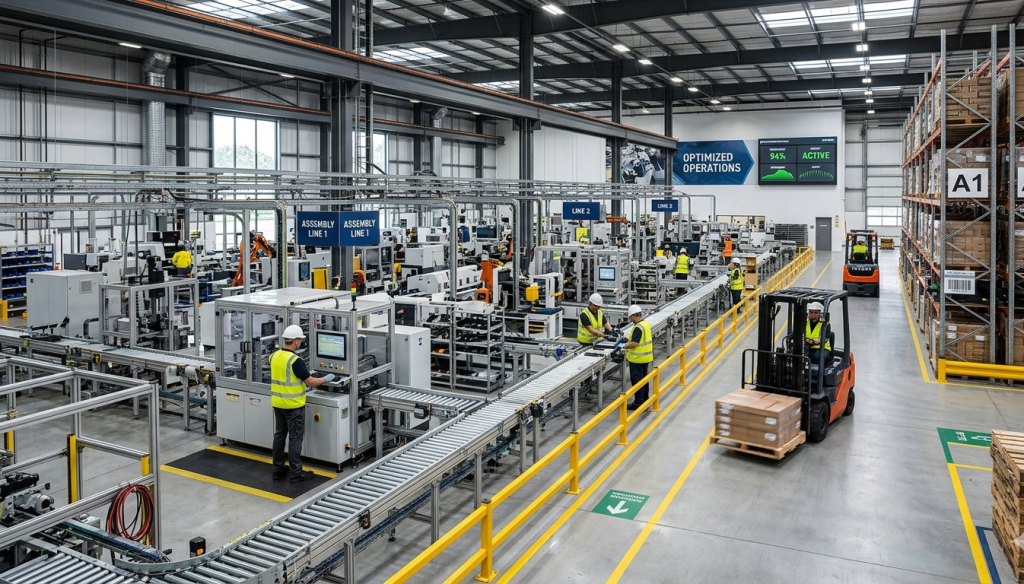
What Is Factory Layout?
Factory layout refers to the physical arrangement of equipment, machinery, storage areas, workstations, offices, loading bays, and movement pathways within an industrial property.
The goal of a good factory layout is to ensure that materials, products, employees, and equipment can move through the facility as efficiently as possible.
An effective layout considers:
- workflow processes
- production requirements
- storage needs
- employee movement
- safety regulations
- future expansion plans
A well-organized factory allows operations to run smoothly while minimizing unnecessary delays.
Why Factory Layout Matters
Many businesses underestimate the influence that layout has on overall performance.
Even a large factory can become inefficient if work processes are interrupted by poor space planning.
A good layout helps businesses:
- improve productivity
- reduce operational costs
- maximize usable space
- improve workplace safety
- enhance logistics efficiency
These benefits can have a significant impact on profitability and long-term business growth.
Improves Workflow Efficiency
One of the main objectives of factory layout planning is to create a logical workflow.
Materials and products should move through the facility with minimal interruptions.
For example:
- raw materials arrive
- production begins
- products are assembled
- items are packaged
- finished goods are stored
- shipments are dispatched
When these activities are arranged in a logical sequence, employees spend less time moving between areas, allowing operations to become more efficient.
Reduces Unnecessary Movement
Poor factory layouts often result in excessive movement of workers, materials, and equipment.
Examples include:
- long travel distances between departments
- repeated handling of products
- inefficient storage locations
- congested movement pathways
These issues increase labour time and reduce productivity.
A well-planned layout minimizes unnecessary movement and allows employees to focus on productive tasks.
Maximizes Available Space
Industrial property costs continue to rise, making efficient space utilization increasingly important.
A properly designed layout helps businesses make better use of available floor space.
Benefits include:
- increased storage capacity
- improved production flow
- reduced clutter
- better equipment positioning
Maximizing usable space may also delay the need for relocation or facility expansion.
Supports Better Inventory Management
Warehouse and storage areas are important components of many industrial facilities.
Poorly organized storage systems can lead to:
- misplaced inventory
- longer retrieval times
- stock management challenges
- reduced productivity
A strategic layout allows inventory to be stored in accessible locations while supporting faster order processing and stock control.
This improves operational efficiency and customer service performance.
Enhances Workplace Safety
Safety is a critical consideration in industrial environments.
Factory layouts should allow employees and equipment to move safely throughout the facility.
Common safety improvements include:
- designated walkways
- clear emergency exits
- organized storage areas
- reduced traffic congestion
- proper machinery spacing
A safer work environment helps reduce accidents and supports compliance with workplace safety standards.
Improves Equipment Utilization
Manufacturing and industrial facilities often rely on expensive machinery and equipment.
Poor placement of equipment can create production delays and operational inefficiencies.
An optimized layout helps ensure:
- equipment is accessible
- maintenance can be performed easily
- production processes remain uninterrupted
- resources are used effectively
This contributes to smoother operations and better return on investment.
Supports Faster Loading and Unloading
Many industrial businesses depend on transportation and logistics activities.
The location of loading bays, storage areas, and access points can significantly influence operational speed.
A well-planned factory layout can:
- reduce truck waiting times
- improve loading efficiency
- streamline goods movement
- reduce transportation delays
Efficient logistics operations can improve customer satisfaction and overall business performance.
Helps Businesses Adapt to Growth
Business needs often change over time.
A factory that meets current requirements may become insufficient as production volumes increase.
Flexible factory layouts provide room for:
- additional equipment
- expanded storage
- new production lines
- workforce growth
Planning for future expansion can help businesses avoid costly relocations and operational disruptions.
Common Factory Layout Mistakes
Businesses should avoid common layout problems such as:
Overcrowded Work Areas
Insufficient space can reduce productivity and increase safety risks.
Poor Storage Placement
Inventory stored in inconvenient locations can slow operations.
Limited Accessibility
Restricted access to equipment and workstations can create bottlenecks.
Ignoring Future Growth
Failing to plan for expansion may result in expensive modifications later.
Recognizing these issues early can improve overall facility performance.
Choosing the Right Industrial Property
When evaluating industrial properties, businesses should consider more than just size and location.
Important factors include:
- building configuration
- column placement
- ceiling height
- loading access
- warehouse layout potential
- future expansion opportunities
A property that supports efficient layout planning can provide long-term operational advantages.
Conclusion
Factory layout is one of the most important factors influencing business efficiency. A well-designed layout helps improve workflow, reduce unnecessary movement, maximize space, enhance safety, and support future growth.
Businesses that carefully evaluate factory layout when selecting industrial properties are often better positioned to improve productivity and control operational costs.
Whether purchasing or renting a factory, considering layout efficiency can contribute significantly to long-term business success and operational performance.
More Info
FAQs
1. Why is factory layout important?
Factory layout affects workflow, productivity, safety, inventory management, and overall operational efficiency.
2. Can factory layout improve productivity?
Yes. An efficient layout reduces unnecessary movement and helps employees complete tasks more effectively.
3. What factors should be considered in factory layout planning?
Important factors include workflow, storage requirements, equipment placement, safety considerations, and future expansion needs.
4. Does factory layout affect warehouse operations?
Yes. Proper storage organization and efficient movement paths help improve inventory management and logistics performance.
5. Should factory layout be considered when buying industrial property?
Absolutely. A suitable layout can improve operational efficiency and support future business growth.
