
Why Power Supply Capacity Matters When Choosing an Industrial Factory
Choosing the right industrial factory involves much more than selecting a suitable location or building size. Businesses must also evaluate whether the property can support their daily operational requirements, especially its electrical infrastructure. One of the most important technical specifications to consider is the factory’s power supply capacity.
Power supply capacity determines how much electrical power a factory can safely deliver to machinery, production equipment, lighting systems, air-conditioning, automation systems, and other operational facilities. Selecting a factory with insufficient electrical capacity can lead to production limitations, costly upgrades, operational disruptions, and reduced business efficiency.
Whether purchasing or leasing an industrial property, understanding factory power supply requirements helps businesses choose a facility that supports both current operations and future expansion.
For manufacturers, logistics companies, engineering firms, food processing businesses, and many other industrial sectors, power supply capacity is often one of the first specifications evaluated before making an investment decision.
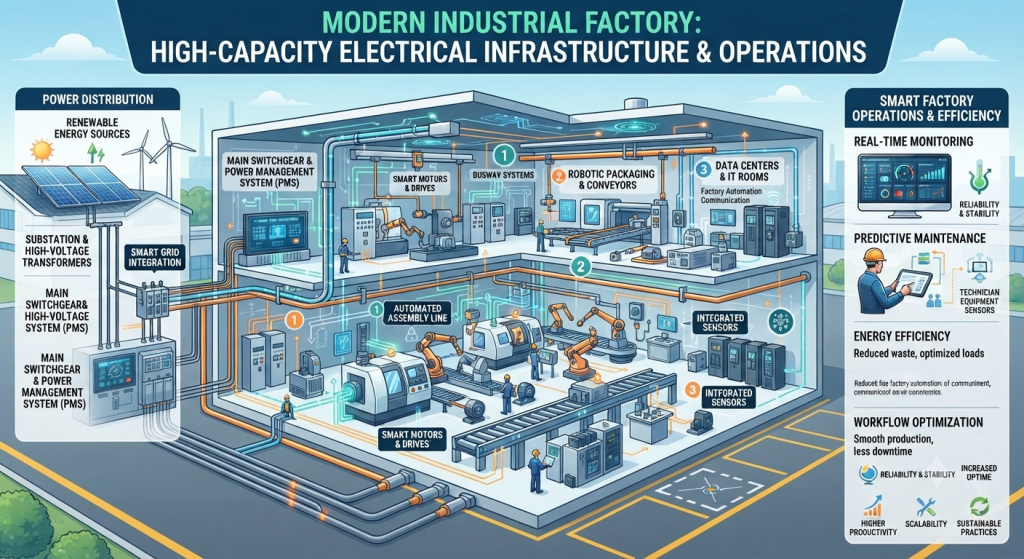
What Is Factory Power Supply Capacity?
Factory power supply capacity refers to the amount of electrical power available to support industrial operations within a building.
Industrial properties are typically supplied with higher electrical capacities than residential or commercial buildings because they operate heavy machinery and production equipment.
Factory electrical capacity may be expressed through specifications such as:
- Electrical supply rating
- Three-phase power
- Ampere (A) capacity
- Transformer capacity
- Power distribution systems
The available electrical supply determines how much equipment can operate safely at the same time without overloading the electrical system.
Why Power Supply Is Critical for Industrial Operations
Most industrial businesses rely heavily on electricity to keep daily operations running efficiently.
Electrical power supports:
- Manufacturing machinery
- Production lines
- Industrial automation
- Conveyor systems
- Air compressors
- Cold storage facilities
- Warehouse equipment
- Office operations
Without sufficient electrical capacity, production efficiency may decrease while operating costs increase.
Choosing the correct factory helps ensure business operations remain reliable and productive.
Different Industries Have Different Power Requirements
Every industry uses electricity differently.
Some businesses require only moderate electrical capacity, while others depend on high-power industrial equipment operating throughout the day.
Examples include:
Light Manufacturing
Often requires moderate electrical capacity for smaller production equipment and assembly operations.
Food Processing
Frequently operates refrigeration systems, packaging equipment, mixers, ovens, and processing machinery simultaneously.
Engineering and Fabrication
May require significant electrical capacity to operate welding equipment, CNC machines, compressors, and heavy industrial tools.
Logistics and Warehousing
Although warehouses generally consume less production power, facilities with automated storage systems, forklifts, cold rooms, or distribution equipment may still require substantial electrical infrastructure.
Selecting an industrial property with suitable electrical capacity ensures the facility can support industry-specific operations efficiently.
Avoiding Costly Future Upgrades
Many businesses initially choose factories based on rental price or floor area while overlooking electrical capacity.
If the available power cannot support future operations, businesses may need to invest in expensive upgrades later.
Potential additional costs include:
- Electrical infrastructure upgrades
- Transformer installation
- Distribution board replacement
- Cable upgrades
- Equipment downtime
- Temporary operational disruptions
Choosing a factory with sufficient power from the beginning helps reduce these unexpected expenses and supports smoother business growth.
Supporting Business Expansion
Most businesses plan to expand as demand increases.
Future growth may involve:
- Additional machinery
- More production lines
- Warehouse automation
- Expanded office space
- New manufacturing processes
All of these improvements increase electrical demand.
A factory with adequate power supply provides greater flexibility for future expansion without requiring immediate electrical modifications.
Businesses that plan ahead are often better positioned for long-term operational success.
Improving Operational Efficiency
Reliable electrical infrastructure contributes directly to business productivity.
Adequate factory power supply helps:
- Maintain uninterrupted production
- Reduce equipment downtime
- Improve manufacturing efficiency
- Support automated systems
- Increase operational reliability
Stable electrical capacity allows businesses to operate confidently while minimising disruptions caused by overloaded electrical systems.
Power Supply Affects Equipment Performance
Modern industrial facilities rely on sophisticated machinery and equipment that require stable electrical power to operate efficiently.
Insufficient electrical capacity may affect:
-
Production machines
-
CNC equipment
-
Injection moulding machines
-
Packaging systems
-
Refrigeration equipment
-
Industrial compressors
-
Conveyor systems
When machinery does not receive adequate electrical power, businesses may experience reduced productivity, equipment malfunctions, or unexpected operational interruptions.
Selecting a factory with appropriate electrical infrastructure helps protect valuable equipment while maintaining consistent production performance.
Improving Workplace Safety
Electrical safety is a critical consideration for every industrial facility.
Overloading an electrical system can increase the risk of:
-
Circuit breaker trips
-
Equipment overheating
-
Electrical faults
-
Production downtime
-
Fire hazards
A factory designed with sufficient electrical capacity helps minimise these risks while supporting a safer working environment for employees and equipment.
Professional industrial properties are typically designed to accommodate the electrical demands of modern industrial operations more effectively.
Why Factory Buyers Should Review Electrical Specifications
Before purchasing or leasing an industrial property, businesses should carefully review the available electrical infrastructure.
Important factors include:
-
Available ampere (A) capacity
-
Three-phase electrical supply
-
Transformer capacity
-
Distribution board condition
-
Expansion capability
-
Compliance with operational requirements
Reviewing these specifications helps businesses avoid selecting a property that may limit future operations.
Working with experienced industrial property consultants also helps ensure buyers understand how electrical capacity affects long-term business performance.
Matching Factory Specifications to Business Needs
Every business has unique operational requirements.
Selecting a factory simply because it has the largest available electrical supply may not always be the most cost-effective decision.
Instead, businesses should consider:
-
Current equipment requirements
-
Future expansion plans
-
Manufacturing processes
-
Energy consumption
-
Production schedules
-
Operational efficiency
Choosing a property that matches both current and future requirements helps maximise return on investment while supporting sustainable growth.
Why Professional Industrial Property Advice Matters
Industrial property selection involves many technical considerations beyond building size and location.
Experienced industrial property consultants can help businesses evaluate:
-
Factory specifications
-
Electrical infrastructure
-
Operational suitability
-
Expansion opportunities
-
Industrial zoning
-
Investment potential
Professional guidance reduces the likelihood of selecting a factory that cannot support future operational needs.
This allows businesses to make more informed property decisions with greater confidence.
Common Mistakes When Choosing an Industrial Factory
Some businesses focus primarily on price while overlooking important operational specifications.
Common mistakes include:
-
Ignoring electrical capacity
-
Underestimating future expansion
-
Failing to assess production requirements
-
Choosing unsuitable industrial properties
-
Overlooking infrastructure limitations
-
Not consulting experienced property specialists
Avoiding these mistakes helps businesses reduce future costs while selecting properties that better support long-term growth.
Long-Term Benefits of Choosing the Right Power Supply Capacity
Selecting an industrial property with suitable electrical capacity provides numerous long-term advantages.
Benefits include:
✔ Improved operational efficiency
✔ Better equipment performance
✔ Reduced downtime
✔ Greater workplace safety
✔ Easier future expansion
✔ Lower upgrade costs
✔ Improved business productivity
✔ Stronger long-term investment value
A factory with the right electrical infrastructure allows businesses to operate more efficiently while supporting sustainable growth for years to come.
Conclusion
Factory power supply capacity is one of the most important technical factors to evaluate when purchasing or leasing an industrial property. While location, building size, and accessibility remain important, the available electrical capacity directly affects how efficiently a business can operate both now and in the future.
A factory with sufficient power supply supports manufacturing equipment, warehouse operations, automation systems, and future business expansion without placing unnecessary strain on the electrical infrastructure. In contrast, choosing a property with inadequate electrical capacity may lead to costly upgrades, operational disruptions, reduced productivity, and limitations on future growth.
Every industry has different electrical requirements, making it essential to select an industrial property that matches your operational needs. Carefully reviewing power supply specifications before making a decision helps businesses avoid unexpected expenses while ensuring the property can support long-term success.
Working with experienced industrial property specialists also makes it easier to identify factories that meet your technical, operational, and investment requirements. By considering electrical capacity alongside other important property features, businesses can make more informed decisions and invest in industrial facilities that support sustainable growth.
FAQs
1. What is factory power supply capacity?
Factory power supply capacity refers to the amount of electrical power available to support industrial operations within a factory. It determines whether the property can safely operate machinery, production equipment, lighting systems, and other electrical installations.
2. Why is power supply capacity important when choosing an industrial factory?
Adequate power supply ensures that machinery and equipment operate efficiently without overloading the electrical system. It also supports future business expansion and helps avoid expensive electrical upgrades after moving into the property.
3. How do I know what power capacity my business needs?
The required electrical capacity depends on your industry, machinery, production processes, and future expansion plans. Businesses should assess their operational requirements and consult qualified professionals or industrial property specialists before selecting a factory.
4. Can a factory’s electrical capacity be upgraded?
In some cases, electrical capacity can be upgraded, but the process may involve significant costs, regulatory approvals, transformer upgrades, and operational downtime. Choosing a factory with suitable capacity from the beginning is often more cost-effective.
5. Should electrical capacity be considered alongside other factory specifications?
Yes. Power supply capacity should be evaluated together with factors such as location, floor loading, ceiling height, loading bays, accessibility, and future expansion potential to ensure the property meets both current and long-term business needs.
