
How Loading Bay Design Improves Warehouse Efficiency
Warehouse efficiency plays a major role in the success of businesses that rely on storage, manufacturing, distribution, or logistics. While companies often invest in better equipment, warehouse technology, and inventory systems, one important feature is sometimes overlooked—the loading bay.
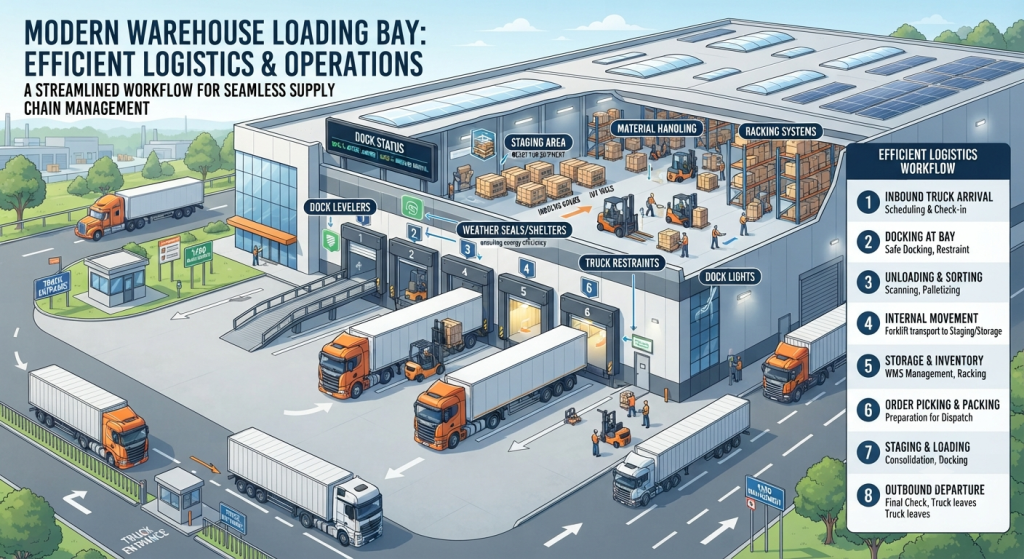
A loading bay is much more than a space where goods are loaded and unloaded. It serves as the connection between a warehouse and the transportation network, allowing products to move safely and efficiently between vehicles and storage areas. When the loading bay is properly designed, businesses can improve productivity, reduce delays, minimise safety risks, and support smoother daily operations.
On the other hand, a poorly planned loading bay may create traffic congestion, slow down deliveries, increase labour costs, and reduce the overall efficiency of the warehouse.
Understanding the importance of loading bay design helps business owners choose industrial properties that better support long-term operational requirements.
What Is a Loading Bay?
A loading bay is a designated area where goods are transferred between transport vehicles and a warehouse or factory.
Depending on the type of business, loading bays may be used for:
- Receiving raw materials
- Shipping finished products
- Loading delivery vehicles
- Unloading incoming stock
- Moving heavy equipment
- Managing daily logistics
Loading bays are essential for many industries, including manufacturing, distribution, wholesale, retail, and logistics.
An efficient loading bay helps ensure products move quickly while reducing unnecessary handling and delays.
Why Loading Bay Design Matters
Every warehouse handles the movement of goods differently.
The design of the loading bay directly affects how efficiently these activities can be completed.
A well-designed loading bay helps businesses:
- Improve workflow
- Reduce loading times
- Increase productivity
- Improve workplace safety
- Support larger delivery volumes
Small improvements in loading bay design can produce significant operational benefits over time.
Faster Loading and Unloading
One of the biggest advantages of a well-designed loading bay is faster movement of goods.
When trucks can access loading areas easily and workers have enough space to operate equipment safely, loading and unloading become much more efficient.
This helps businesses:
- Reduce waiting times
- Increase delivery capacity
- Improve scheduling
- Minimise vehicle congestion
Faster operations allow warehouses to handle more deliveries throughout the day.
Better Warehouse Workflow
A loading bay should work together with the warehouse layout rather than creating unnecessary obstacles.
An efficient design allows products to move smoothly between:
- Delivery vehicles
- Loading bays
- Storage areas
- Production zones
- Dispatch sections
When goods follow a logical movement path, employees spend less time transporting materials and more time completing productive work.
This improves overall warehouse efficiency while reducing unnecessary labour.
Improved Safety for Workers
Loading bays are busy working environments where forklifts, trucks, pallets, and employees operate close to one another.
Poorly designed loading areas increase the risk of workplace accidents.
Features that improve safety include:
- Clearly marked traffic routes
- Adequate lighting
- Non-slip surfaces
- Sufficient turning space
- Safe pedestrian walkways
- Proper vehicle access
A safer loading environment helps reduce workplace injuries while supporting more efficient daily operations.
Reducing Vehicle Congestion
Delivery vehicles often arrive throughout the day.
If the loading bay cannot accommodate traffic efficiently, vehicles may experience unnecessary waiting times.
Congestion can result in:
- Delivery delays
- Increased fuel costs
- Scheduling disruptions
- Reduced productivity
A properly planned loading bay provides sufficient space for trucks to enter, park, load, unload, and exit without affecting other warehouse activities.
Supporting Forklift Operations
Forklifts play an essential role in warehouse operations.
Loading bay design should provide enough space for forklifts to move safely between vehicles and storage locations.
An efficient layout helps:
- Reduce travel distances
- Improve material handling
- Increase loading speed
- Reduce equipment wear
Smooth forklift movement also lowers the risk of accidents and product damage.
Loading Bay Design Improves Productivity
Warehouse productivity depends on how efficiently employees complete their daily tasks.
A well-designed loading bay reduces unnecessary movement and helps workers complete loading and unloading activities more quickly.
Productivity improvements may include:
- Faster order processing
- Better inventory movement
- Reduced labour time
- Improved delivery turnaround
- More efficient warehouse operations
Over time, these improvements contribute to lower operating costs and higher customer satisfaction.
Important Features of an Efficient Loading Bay
Not all loading bays are designed the same.
Several features contribute to better warehouse performance.
Adequate Space
The loading area should provide sufficient room for trucks, forklifts, pallets, and workers to operate safely without congestion.
Easy Vehicle Access
Wide entrances and well-planned traffic flow allow delivery vehicles to enter and exit efficiently.
Dock Height Compatibility
Loading docks should match the height of delivery vehicles whenever possible.
This reduces manual handling and improves loading efficiency.
Durable Flooring
Loading bays experience constant movement from heavy equipment and vehicles.
Strong industrial flooring helps support long-term durability while reducing maintenance requirements.
Good Lighting
Proper lighting improves visibility for workers, especially during early morning, evening, or indoor loading operations.
Better visibility also contributes to workplace safety and loading accuracy.
Why Loading Bay Design Matters When Choosing an Industrial Property
Businesses looking for a factory or warehouse often focus on location, building size, or rental costs.
However, the loading bay should also be carefully evaluated before making a decision.
A property with a well-designed loading bay can provide long-term operational advantages by supporting faster logistics, improved safety, and greater efficiency.
Choosing the right industrial property with suitable loading facilities helps businesses reduce operational challenges while preparing for future growth.
Common Loading Bay Design Mistakes
An inefficient loading bay can create operational challenges that affect productivity and increase business costs. Many of these issues develop because the loading area was not designed to meet the daily needs of the warehouse.
Some common loading bay design mistakes include:
- Limited space for delivery vehicles
- Narrow access roads
- Poor traffic flow
- Insufficient lighting
- Uneven or damaged flooring
- Limited turning space for trucks
- Poor separation between vehicles and pedestrians
- Inadequate loading dock height
Addressing these issues helps businesses improve efficiency while creating a safer working environment.
How Loading Bay Design Reduces Operating Costs
A well-designed loading bay does more than improve daily operations—it also helps businesses reduce long-term operating costs.
When loading and unloading activities are completed more efficiently, businesses can benefit from:
- Lower labour costs
- Reduced vehicle waiting times
- Less product handling
- Lower equipment wear
- Improved fuel efficiency
- Faster delivery turnaround
These savings can become significant over time, particularly for warehouses that handle large volumes of goods every day.
The Importance of Planning for Future Growth
As a business expands, its logistics requirements often increase.
More deliveries, larger vehicles, and higher inventory levels place additional pressure on warehouse operations.
When choosing an industrial property, businesses should consider whether the loading bay can support future growth.
Factors to evaluate include:
- Capacity for additional delivery vehicles
- Space for larger trucks
- Efficient traffic flow
- Room for future warehouse expansion
- Compatibility with automated warehouse systems
Planning ahead helps businesses avoid expensive property modifications in the future.
Choosing the Right Industrial Property
Selecting the right warehouse or factory involves more than comparing property size and location.
Businesses should also assess operational features that directly affect productivity.
When evaluating an industrial property, consider:
- Loading bay layout
- Truck accessibility
- Internal warehouse flow
- Ceiling height
- Floor loading capacity
- Parking facilities
- Road accessibility
- Future expansion potential
A property designed with efficient logistics in mind can improve business operations from the first day of occupancy.
Why Professional Property Advice Matters
Finding a warehouse with the right loading bay configuration requires experience and an understanding of business operations.
Industrial property specialists can help businesses evaluate whether a property is suitable based on:
- Industry requirements
- Delivery frequency
- Vehicle size
- Storage capacity
- Operational workflow
- Business growth plans
Professional guidance allows businesses to choose a property that supports both current and future operational needs.
Long-Term Benefits of an Efficient Loading Bay
Investing in an industrial property with a well-designed loading bay provides lasting business advantages.
These include:
✔ Faster loading and unloading
✔ Improved warehouse productivity
✔ Better traffic management
✔ Reduced operating costs
✔ Improved workplace safety
✔ Better logistics efficiency
✔ Increased customer satisfaction
✔ Greater support for business growth
A properly designed loading bay contributes to smoother operations while helping businesses remain competitive in today’s fast-moving industrial environment.
Conclusion
Loading bay design is a critical factor that directly affects warehouse efficiency, logistics performance, and overall business productivity. While location, building size, and rental costs are important considerations when selecting an industrial property, the loading bay should not be overlooked.
A well-designed loading bay supports faster loading and unloading, improves warehouse workflow, reduces vehicle congestion, enhances workplace safety, and lowers operating costs. These advantages help businesses operate more efficiently while preparing for future growth.
Whether you are purchasing or leasing a warehouse or factory, evaluating the loading bay design can help you choose a property that supports long-term operational success and maximises your business investment.
FAQs
1. Why is loading bay design important for warehouse efficiency?
A well-designed loading bay allows goods to be loaded and unloaded quickly and safely. It improves traffic flow, reduces delivery delays, minimises product handling, and helps employees work more efficiently. These improvements contribute to smoother warehouse operations and lower operating costs.
2. What features should a good loading bay have?
An efficient loading bay should provide adequate space for trucks and forklifts, easy vehicle access, durable flooring, suitable dock height, good lighting, and safe pedestrian walkways. These features improve productivity while reducing the risk of workplace accidents and operational delays.
3. How does loading bay design affect business costs?
Poor loading bay design can increase labour costs, vehicle waiting times, fuel consumption, equipment wear, and delivery delays. A properly planned loading bay helps businesses operate more efficiently, allowing them to save time and reduce long-term operational expenses.
4. Should loading bay design be considered when buying or leasing an industrial property?
Yes. Loading bay design is an important factor when selecting a factory or warehouse because it directly affects logistics efficiency and daily operations. Businesses should evaluate vehicle access, loading space, traffic flow, and future expansion potential before making a property decision.
5. Can an efficient loading bay support future business growth?
Absolutely. A loading bay designed with future expansion in mind can accommodate larger delivery volumes, bigger vehicles, and increased warehouse activity. Choosing an industrial property with suitable loading facilities helps businesses grow without facing unnecessary operational limitations.
