
Why Choosing the Right Factory Size Matters for Business Growth
Choosing a factory is one of the most important decisions a business can make. While location, accessibility, and price are all essential considerations, selecting the right factory size can have a significant impact on daily operations, productivity, and future growth.
A factory that is too small may restrict production capacity, create storage challenges, and limit expansion opportunities. On the other hand, a factory that is much larger than necessary may increase operating costs and reduce overall efficiency.
Finding the right balance allows businesses to maximise available space, improve workflow, and prepare for future growth. Whether purchasing or leasing an industrial property, understanding how factory size affects business operations helps companies make more informed long-term investment decisions.
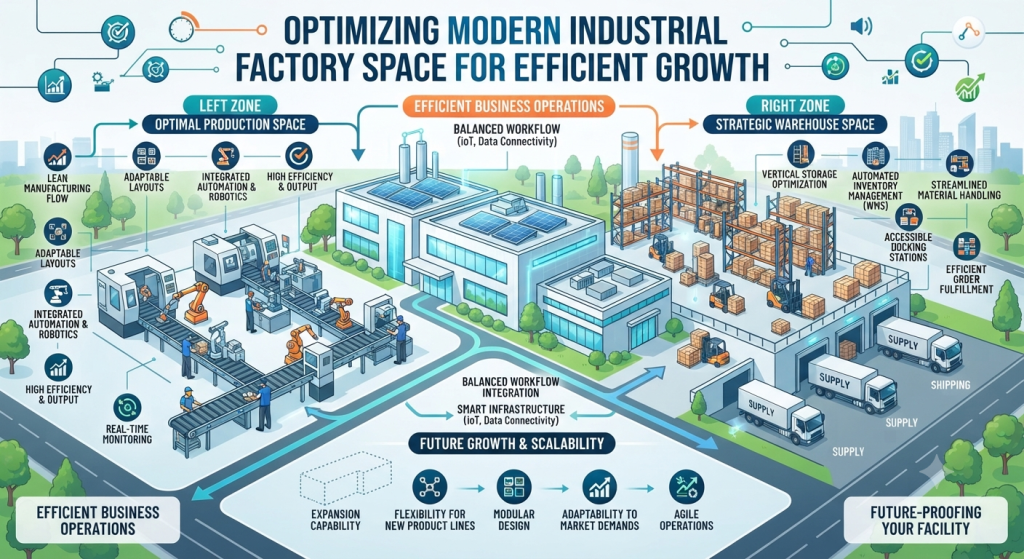
Why Factory Size Is More Than Floor Area
Many businesses focus only on the total built-up area when comparing industrial properties.
However, choosing the right factory involves much more than simply selecting the largest available space.
A suitable factory should support:
- Current production requirements
- Storage capacity
- Employee work areas
- Equipment installation
- Loading and unloading activities
- Future business expansion
The right factory size provides sufficient space without creating unnecessary operational expenses.
Supports Business Growth
Businesses often grow over time.
Production increases, additional employees are hired, and new equipment may be required to meet customer demand.
Choosing a factory with room for future expansion allows businesses to adapt without relocating too soon.
Planning for growth helps businesses:
- Increase production capacity
- Expand storage areas
- Add manufacturing equipment
- Improve operational flexibility
- Reduce relocation costs
Considering future requirements during the property selection process can save both time and money.
Improves Operational Efficiency
Factory size directly influences how efficiently daily operations are carried out.
A well-sized factory allows employees, machinery, and materials to move safely and efficiently throughout the facility.
An efficient factory layout can improve:
- Production workflow
- Material handling
- Inventory management
- Equipment accessibility
- Employee productivity
Well-planned industrial spaces reduce unnecessary movement and support smoother business operations.
Provides Sufficient Storage Space
Storage requirements are often underestimated when selecting an industrial property.
Businesses require adequate space for:
- Raw materials
- Finished products
- Packaging materials
- Spare parts
- Equipment
- Inventory management
Choosing the right factory size ensures storage areas remain organised while supporting efficient inventory control.
Supports Safe Working Environments
Workplace safety should always be considered when evaluating factory size.
Overcrowded production areas may increase the risk of accidents and reduce operational efficiency.
A properly sized factory provides space for:
- Safe walkways
- Equipment operation
- Loading activities
- Emergency access
- Material movement
Creating a safer working environment benefits both employees and daily operations.
Reduces Long-Term Operating Costs
Although larger factories may appear attractive, unnecessary space often results in higher operating expenses.
Businesses may face increased costs for:
- Utilities
- Maintenance
- Cleaning
- Security
- Property management
Selecting a factory that matches operational requirements helps businesses manage costs more effectively while maintaining productivity.
Improves Logistics and Distribution
Factory size also affects logistics and transportation efficiency.
Businesses that regularly receive raw materials or ship finished products require sufficient space for loading and unloading activities.
A suitable industrial property should provide room for:
- Delivery vehicles
- Loading bays
- Goods handling
- Warehouse operations
- Vehicle movement
Efficient logistics improve delivery performance and help businesses serve customers more effectively.
Buying or Renting the Right Factory
Every business has different operational and financial requirements, making it important to evaluate whether buying or renting is the better option.
Purchasing a factory may be suitable for businesses seeking long-term stability and investment value. Renting, however, offers greater flexibility and may be ideal for growing businesses that expect their space requirements to change.
When comparing industrial properties, businesses should consider:
- Current operational needs
- Future expansion plans
- Budget
- Property location
- Lease or ownership costs
- Facility features
Choosing the right property solution helps support both short-term operations and long-term business objectives.
Common Mistakes When Choosing Factory Size
Selecting an industrial property without careful planning can lead to unnecessary costs and operational challenges.
Some common mistakes include:
- Choosing a factory based only on price
- Underestimating future growth
- Overlooking storage requirements
- Ignoring loading and unloading space
- Selecting excessive floor space
- Not considering employee facilities
- Failing to assess workflow requirements
Avoiding these mistakes helps businesses choose an industrial property that supports efficient operations and future expansion.
Why Professional Industrial Property Advice Matters
Finding the right factory involves more than comparing available properties.
Professional industrial property consultants help businesses identify factories that match their operational requirements, budget, and long-term goals.
Professional services often include:
- Property sourcing
- Site selection advice
- Market insights
- Investment guidance
- Purchase and leasing support
- Industrial property consultation
Working with experienced consultants helps businesses make more informed decisions while reducing the risk of selecting unsuitable properties.
Long-Term Benefits of Choosing the Right Factory Size
Selecting the right factory size offers lasting advantages for businesses across different industries.
These benefits include:
✔ Improved operational efficiency
✔ Better workflow management
✔ Lower operating costs
✔ Greater storage flexibility
✔ Easier business expansion
✔ Improved workplace safety
✔ Higher productivity
✔ Better long-term investment value
Choosing a factory that meets both current and future needs helps businesses operate more efficiently while supporting sustainable growth.
Conclusion
The size of a factory plays a significant role in determining how efficiently a business operates. Choosing a property that provides sufficient space for production, storage, logistics, and future expansion helps businesses improve productivity while controlling long-term operating costs.
Rather than focusing only on purchase price or rental rates, businesses should carefully evaluate their operational requirements before selecting an industrial property.
Working with experienced industrial property professionals can simplify the selection process and help businesses secure a factory that supports long-term success.
FAQs
1. Why is choosing the right factory size important?
Choosing the right factory size helps improve operational efficiency, supports future business growth, reduces unnecessary operating costs, and provides adequate space for production, storage, and logistics.
2. How do I determine the right factory size for my business?
Businesses should consider production capacity, storage requirements, employee workspace, equipment needs, loading facilities, and future expansion plans before selecting a factory.
3. Is it better to buy or rent a factory?
The best option depends on your business goals, financial position, and long-term plans. Buying offers investment potential and stability, while renting provides greater flexibility for growing businesses.
4. Can choosing the wrong factory size increase operating costs?
Yes. A factory that is too large may increase maintenance and utility expenses, while one that is too small can reduce productivity and require costly relocation as the business grows.
5. Why should I work with an industrial property consultant?
Industrial property consultants help businesses evaluate their requirements, compare suitable properties, understand market conditions, and make informed buying or leasing decisions.
