
How the Right Industrial Property Can Improve Business Efficiency
Choosing the right industrial property is one of the most important decisions a business can make. Whether you operate a manufacturing company, logistics business, warehouse, or distribution centre, the property you choose can directly influence productivity, operating costs, and long-term business growth.
Many businesses focus primarily on purchase price or rental costs when selecting an industrial property. While cost is certainly an important factor, other considerations such as location, accessibility, facility layout, infrastructure, and future expansion opportunities are equally important.
A well-chosen industrial property supports smoother daily operations, improves employee productivity, and creates a stronger foundation for business success.
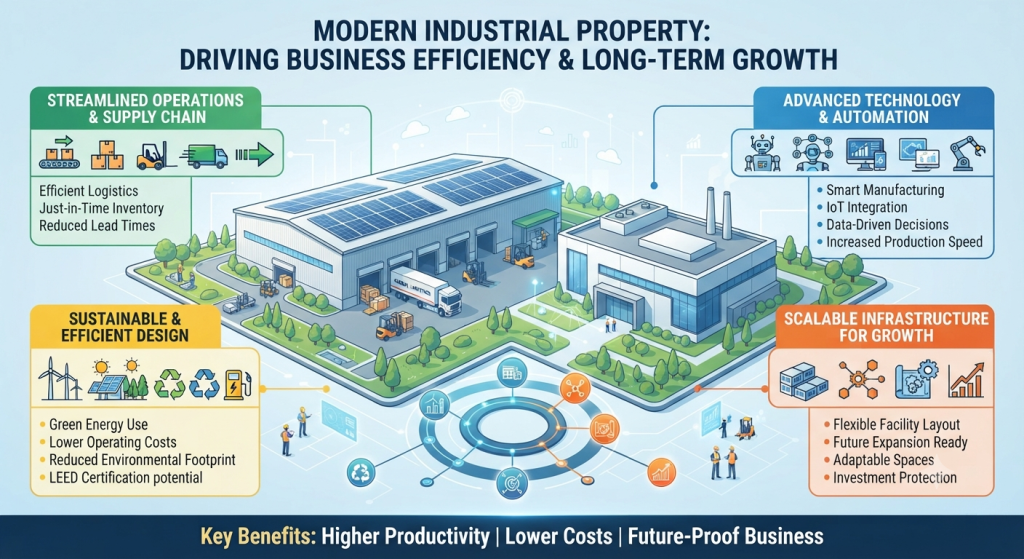
Why Industrial Property Matters
Industrial properties are more than just buildings where businesses operate.
They serve as the foundation for:
- Manufacturing operations
- Warehousing
- Storage
- Distribution
- Logistics
- Product assembly
Choosing a suitable property helps businesses operate more efficiently while reducing unnecessary operational challenges.
The right facility allows companies to maximise productivity while maintaining flexibility for future growth.
Better Location Improves Daily Operations
Location is one of the biggest factors influencing business efficiency.
An industrial property located near:
- Major highways
- Ports
- Airports
- Industrial hubs
- Suppliers
- Customers
can significantly reduce transportation time and logistics costs.
Businesses with strategically located facilities often enjoy faster deliveries, lower fuel expenses, and more reliable supply chains.
Efficient Layout Supports Productivity
The internal design of an industrial property affects workflow.
A well-planned factory or warehouse provides:
- Smooth movement of goods
- Organised storage areas
- Efficient production lines
- Easy loading and unloading
- Safe working environments
Poor layouts can create bottlenecks, increase labour costs, and reduce operational efficiency.
Selecting a property with a functional layout helps businesses improve productivity without major renovations.
Sufficient Space for Business Growth
Many companies choose industrial properties based on their current needs without considering future expansion.
As businesses grow, they often require:
- Additional production areas
- Larger warehouses
- Extra office space
- More parking
- Additional loading bays
Choosing a property with room for future expansion can reduce the need for costly relocation later.
Planning ahead allows businesses to scale more efficiently.
Accessibility Benefits Employees and Customers
Accessibility affects more than deliveries.
A convenient location makes it easier for:
- Employees to commute
- Customers to visit
- Suppliers to deliver materials
- Service providers to access the property
Industrial properties with excellent accessibility often experience smoother daily operations and improved customer satisfaction.
Modern Infrastructure Improves Efficiency
Modern industrial facilities often include features that improve operational performance.
Examples include:
- High electrical capacity
- Reliable water supply
- Wide access roads
- Large loading bays
- High ceiling clearance
- Advanced security systems
These features help businesses operate more efficiently while reducing operational disruptions.
Lower Operating Costs
The right industrial property can help reduce ongoing business expenses.
Factors that contribute to lower operating costs include:
- Efficient building design
- Better logistics access
- Lower maintenance requirements
- Reduced transportation costs
- Energy-efficient systems
Although some modern facilities may have higher purchase prices, they often generate long-term savings through improved operational efficiency.
Supporting Employee Productivity
A comfortable and well-designed workplace contributes to employee performance.
Industrial properties with:
- Good ventilation
- Adequate lighting
- Proper workspace planning
- Safe working conditions
- Convenient facilities
can improve employee satisfaction and productivity.
Providing a better working environment also helps attract and retain skilled workers.
Supporting Business Expansion
Business needs often change over time.
The right industrial property should support:
- New production lines
- Equipment upgrades
- Additional warehouse capacity
- Increased staffing
- Technology improvements
Selecting a flexible property helps businesses adapt more easily to future opportunities.
Compliance and Safety
Industrial properties should comply with local regulations and safety requirements.
Important considerations include:
- Building approvals
- Fire safety systems
- Emergency exits
- Drainage systems
- Environmental compliance
Purchasing or renting compliant industrial properties reduces legal risks and supports safer business operations.
Why Professional Property Advice Matters
Choosing an industrial property involves more than comparing prices.
Professional property consultants can help businesses evaluate:
- Market trends
- Property value
- Investment potential
- Location advantages
- Infrastructure quality
- Business suitability
Their experience helps buyers and tenants make more informed decisions.
Common Mistakes When Choosing Industrial Property
Businesses sometimes make costly mistakes such as:
❌ Choosing a property that is too small
❌ Ignoring future expansion
❌ Prioritising price over location
❌ Overlooking infrastructure
❌ Not considering transportation access
❌ Failing to inspect the property’s condition
Avoiding these mistakes helps businesses maximise the value of their investment.
Long-Term Investment Value
Industrial property is not only an operational asset but also a long-term investment.
Well-located industrial properties may offer:
- Strong capital appreciation
- Higher rental demand
- Better resale value
- Long-term business stability
Choosing the right property today can provide financial benefits for many years.
How to Choose the Right Industrial Property
Before making a decision, businesses should evaluate:
✔ Business requirements
✔ Location
✔ Accessibility
✔ Property size
✔ Infrastructure
✔ Expansion opportunities
✔ Budget
✔ Legal compliance
✔ Future operational needs
A thorough evaluation helps ensure the property supports both current operations and long-term growth.
Conclusion
The right industrial property plays a significant role in improving business efficiency. From strategic location and functional layouts to modern infrastructure and future expansion opportunities, every aspect of a property can influence operational performance.
Businesses that carefully evaluate their industrial property needs are better positioned to reduce costs, improve productivity, and support sustainable growth.
Whether buying, renting, or investing, selecting the right industrial property is a decision that delivers long-term value.
FAQs
1. Why is choosing the right industrial property important?
Choosing the right industrial property helps businesses operate more efficiently by providing the space, infrastructure, and accessibility needed for daily operations. A suitable property can reduce transportation costs, improve productivity, support future expansion, and create a better working environment for employees while helping businesses achieve long-term growth.
2. What should businesses consider before buying an industrial property?
Businesses should evaluate several factors, including the property’s location, accessibility, building size, layout, infrastructure, utilities, loading facilities, parking availability, and future expansion potential. It is also important to consider legal compliance, zoning regulations, and how well the property supports the company’s operational requirements.
3. Is renting or buying an industrial property better?
The best option depends on your business objectives and financial situation. Renting offers greater flexibility and lower upfront costs, making it suitable for growing businesses, while purchasing an industrial property provides long-term ownership, potential capital appreciation, and greater control over future modifications and expansion.
4. How does location affect business efficiency?
A strategically located industrial property can significantly improve business efficiency by reducing travel time for employees, lowering transportation and logistics costs, and providing easier access to suppliers, customers, ports, highways, and major industrial areas. A good location can also help improve delivery times and overall operational performance.
5. Can industrial property be a good long-term investment?
Yes. Well-located industrial properties often have strong long-term investment potential due to increasing demand from manufacturing, logistics, and warehousing businesses. Besides supporting daily operations, industrial properties may appreciate in value over time and generate stable rental income, making them a valuable asset for many investors and business owners.
